Shop floor KPIs are the metrics that show, in near real time, whether production is running as planned: OEE, downtime, scrap and lot traceability. Industry 4.0 technology (sensors, MES, IoT) only delivers value when this data arrives integrated and comparable; the difference between a connected factory and a data-driven factory lies in the engineering behind the integration, not in the number of sensors installed.
What does Industry 4.0 change in shop floor measurement?
Before Industry 4.0, production KPIs were calculated by hand, per shift or per day, with a long lag between the event and the record. Sensors, cameras and monitoring systems now collect data automatically and in real time, making it possible to identify bottlenecks as they happen, not at the end of the shift.
On a mature shop floor, OEE is calculated by the minute via IoT. Plants at an early stage of digitalization usually start measuring per shift, move to hourly calculation after a few months of maturity, and only then advance to real-time readings.
Which shop floor KPIs should you track first?
| KPI | What it measures | Why it matters |
|---|---|---|
| OEE (Overall Equipment Effectiveness) | Equipment availability x performance x quality | A market benchmark OEE is around 85%; most plants operate well below that, which reveals potential gains without new machine investment |
| Downtime | Time equipment is stopped, by cause (maintenance, setup, lack of input) | Without an identified root cause, the same stoppage repeats indefinitely |
| Scrap | Volume of production discarded for non-conformity | Directly affects raw material cost and effective capacity |
| Traceability | Complete history of a lot, from input to finished product | Essential for quality, warranty and regulatory compliance |
Often the gain does not require buying new equipment: adjusting processes based on well-measured OEE already frees up 10% to 20% of additional production capacity in the same plant.
Which data sources feed Industry 4.0 KPIs?
Shop floor KPIs come from three main sources: MES (production execution, orders and logging), sensors and IoT (machine availability and performance in real time) and ERP (production orders, inputs and cost). Integrating these three sources is what makes it possible to calculate OEE reliably, not just estimate it from manual logs.
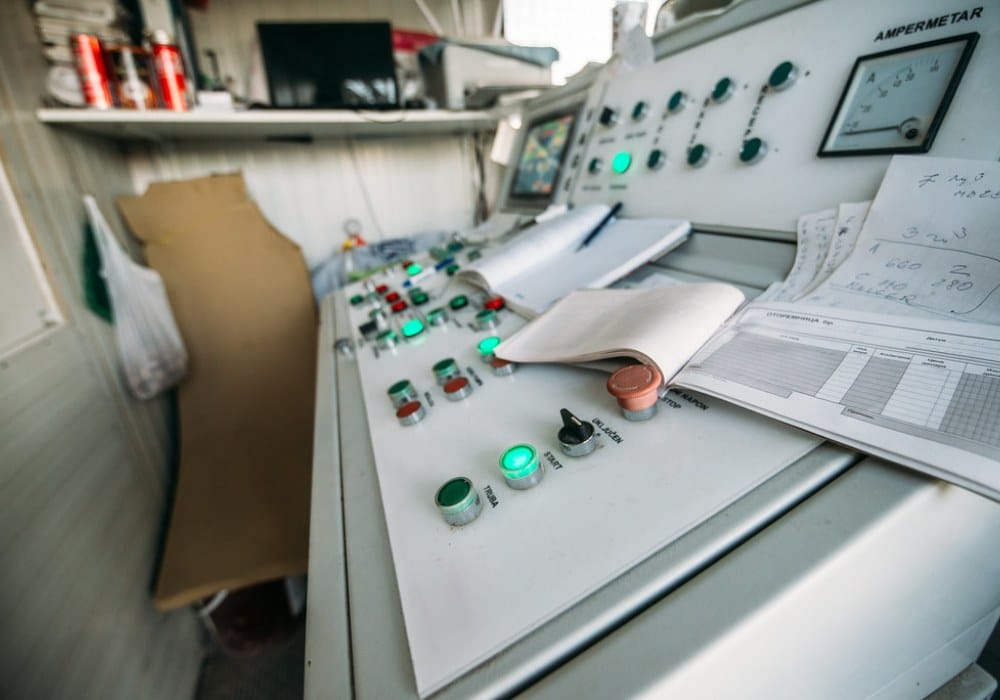
Case: integrated, traceable KPIs on the shop floor
In an industrial plant that integrated MES, sensors and ERP into a single OEE, downtime and scrap dashboard, the gain did not come from replacing machines; it came from seeing the root cause of each stoppage and acting on it with data, not assumptions. The same logic guides beAnalytic’s manufacturing data analytics consulting: the difference lies in the data engineering behind the dashboard, not in the amount of technology installed in the factory.

How does a 90-day shop floor KPI project work?
- Days 1 to 30: diagnostic of sources (MES, sensors, ERP), defining OEE, downtime, scrap and traceability as official KPIs.
- Days 31 to 60: building the dashboard by line and shift, with standardized downtime causes.
- Days 61 to 90: validation with engineering and production, setting OEE targets per line and a root cause analysis routine.
What changes in industrial management over time
With OEE, downtime and scrap history comparable across lines and shifts, the factory starts prioritizing maintenance and process investment based on data, not on the perception of which machine “causes the most trouble”. This comparison also exposes performance differences between shifts that rarely show up in consolidated monthly reports.
Conclusion
Industry 4.0 is not about having more sensors; it is about having the data engineering that turns what sensors capture into reliable OEE, downtime, scrap and traceability KPIs. It is this integration between MES, sensors and ERP that supports capacity gains without requiring new machine investment.
If your plant already has sensors and MES but lacks reliable OEE and traceability KPIs, beAnalytic helps build that integration. Talk to our team and discover the hidden capacity in your production line.
Frequently asked questions
What is OEE and what is the market benchmark?
OEE (Overall Equipment Effectiveness) measures a piece of equipment’s availability, performance and quality. A result around 85% is considered world-class; most plants operate below that.
Which shop floor KPIs are essential in Industry 4.0?
OEE, downtime by cause, scrap and lot traceability. Together, they connect daily operations to cost and quality.
Do I need to replace machines to improve OEE?
In most cases, no. Process adjustments based on well-measured OEE already free up 10% to 20% of additional production capacity.
How long does it take to have reliable shop floor KPIs?
A first working dashboard, integrating MES, sensors and ERP, is usually ready within 60 to 90 days.

Daniel Luz
CEO of beAnalytic. I have led the company for more than 6 years, and my mission is to transform how organizations see and use data to make strategic decisions. I help companies unlock valuable insights, drive operational efficiency and generate real financial impact, with a team specialized in Business Intelligence, Data Engineering and Machine Learning.
- Daniel Luz


- Daniel Luz

- Daniel Luz

- Daniel Luz