
Data analytics for the Agribusiness
We build Business Intelligence, Data Engineering and Machine Learning solutions for agribusiness companies


Data analytics for Agribusiness 4.0, tailored to your operation
We build end-to-end data solutions, from data collection and preparation to process automation, with Business Intelligence, Data Engineering and Machine Learning.
The challenge isn't having data. It's being able to decide with it.
In agribusiness, information is scattered across the field, machines, spreadsheets, ERPs, management systems, operational controls, weather, inventory and trading. When this data doesn't talk to each other, the operation loses time consolidating numbers, spots deviations too late and makes decisions with little visibility into costs, productivity and margin. See how BI for agribusiness connects field, management and market and the overview from the Embrapa survey on digital agriculture in Brazil.


Scattered data
Critical information spread across spreadsheets, systems, machines and parallel controls.
Late visibility
Indicators arrive when the deviation has already hit operations, cost or productivity.
Unclear cost
Difficulty relating inputs, machines, productivity, production and financial results.
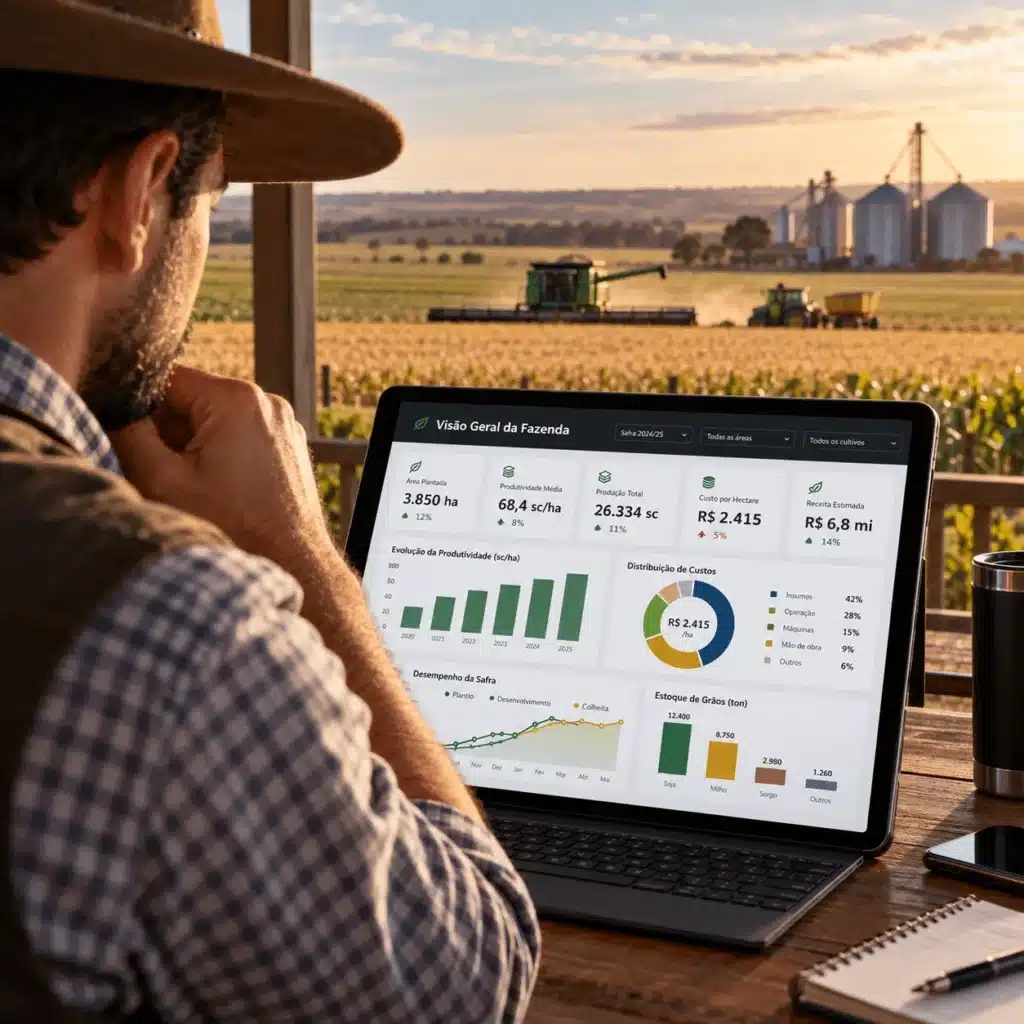

A reliable base to connect field and management
With data engineering, we structure collection, integration, storage and quality so every area works on consistent, traceable numbers. Integration of systems, APIs, files, telemetry and operational databases. History, quality rules, lineage and processing control. Architecture in Data Warehouse ready for BI, automation, analytics and AI.
Data sources
Agricultural, operational, financial, commercial and external data.
Dashboards and indicators
Information organized by decision, area, routine and management level.
Decision and action
Alerts, analyses, prioritization and result tracking.
Models to anticipate, prioritize and automate decisions
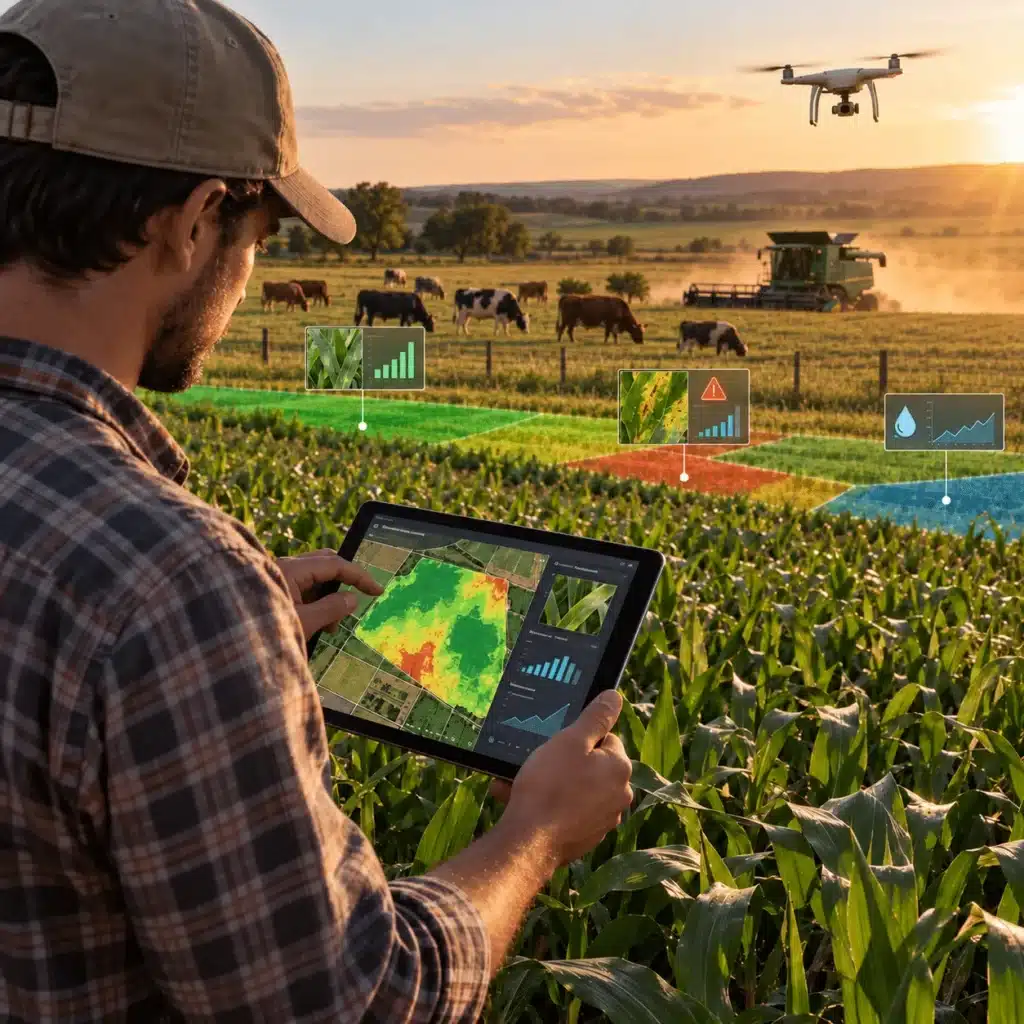
When the process and data are mature, we apply models of Machine Learning and automations to support forecasts, classification, alerts and decision routines. Forecasts and scenarios from the available history. Alerts driven by events and relevant deviations. Automation of repetitive analyses and processes. Learn more about Machine Learning in agriculture.

Harvest
Productivity by area, crop and plot Planned vs. actual Harvest progress and deviations

Costs
Cost per hectare and unit produced Inputs, labor and services Budget vs. actual

Agro-industry
Production and yield Quality and losses Efficiency by stage
Field data organized for agricultural management, more agile
Agricultural management platform / Agritech
In a project focused on field intelligence, beAnalytic supported the structuring and visualization of data to increase clarity on operational, agricultural and management information. The initiative reinforces how integrated data can support the routine of monitoring, planning and decision-making on rural properties.
Agrotech / Sulina
In the project with Sulina, beAnalytic applied data intelligence to turn operational and management information into a more accessible view for decision-making. The case represents the application of BI beyond the farm, connecting indicators that help track performance, processes and results in an agro-industrial operation.
FS Energia
In operations intensive in assets, processes and data, the speed of reading indicators makes a difference. The project with FS Energia shows how beAnalytic structures data from multiple sources to support operational tracking, performance analysis and decisions with more traceability.
Questions about agribusiness data analytics
What is agribusiness data analytics?
It is the use of field, machine, cost, inventory and trading data to support decisions in agricultural operations. It involves integrating sources, standardizing indicators and building dashboards and models that show productivity, costs and margin reliably.
Which agribusiness data can be integrated?
ERPs and farm management systems, machine telemetry, field spreadsheets, weather data, inventory, input purchases and trading. Data engineering connects these sources into a single base, with history and quality rules.
Which indicators should an agricultural operation track?
The most common are productivity by area, crop and plot, planned versus actual harvest, cost per hectare and per unit produced, input consumption, machine efficiency and margin by crop or customer.
How can Machine Learning be used in agribusiness?
With organized historical data, Machine Learning models support productivity and demand forecasts, create alerts for cost or operational deviations and automate repetitive analyses, helping the team prioritize decisions.
Do we need to replace the systems the farm already uses?
No. Integration is done on top of the existing systems, without replacing them. The data is extracted, processed and organized in a central base, and the BI dashboards are built on that base.
Does data analytics also serve agro-industries?
Yes. In agro-industries, the same principles apply to production and yield, quality and losses, efficiency by stage and industrial costs, connecting what happens in the field to what happens in the plant.
Let our specialists take care of of your business data.
- More agility
- Lower costs
- Reliable, organized data
- Integration with 270+ systems

Talk to a specialist in agribusiness data analytics
Fill out the form and wait for one of our specialists to contact you.